Undetectable AI Review

The rewrite changed a conditional instruction into a definite promise in a troubleshooting draft for my support team. I tried Undetectable AI because the original sounded stiff, but the revised text was smoother at the expense of accuracy. That makes it hard to use for anything customers might follow.

I tried working with shorter passages and simplifying the source text before running it again. That reduced the awkward wording, but I still had to compare every sentence with the original. What should I try next to keep the technical meaning intact without spending more time checking the rewrite than editing the draft myself?

I was comparing free AI detectors using the same English passages, and access limits kept interrupting the checks. That made me separate whether a tool got a verdict right from whether I could actually finish using it.


What I counted as a result

The checks happened October 2–3, 2026. I reused six English passages unchanged: four generated pieces covering an essay, business memo, paraphrase, and fictional personal story, plus a Lewis Carroll excerpt and an AI-edited version.

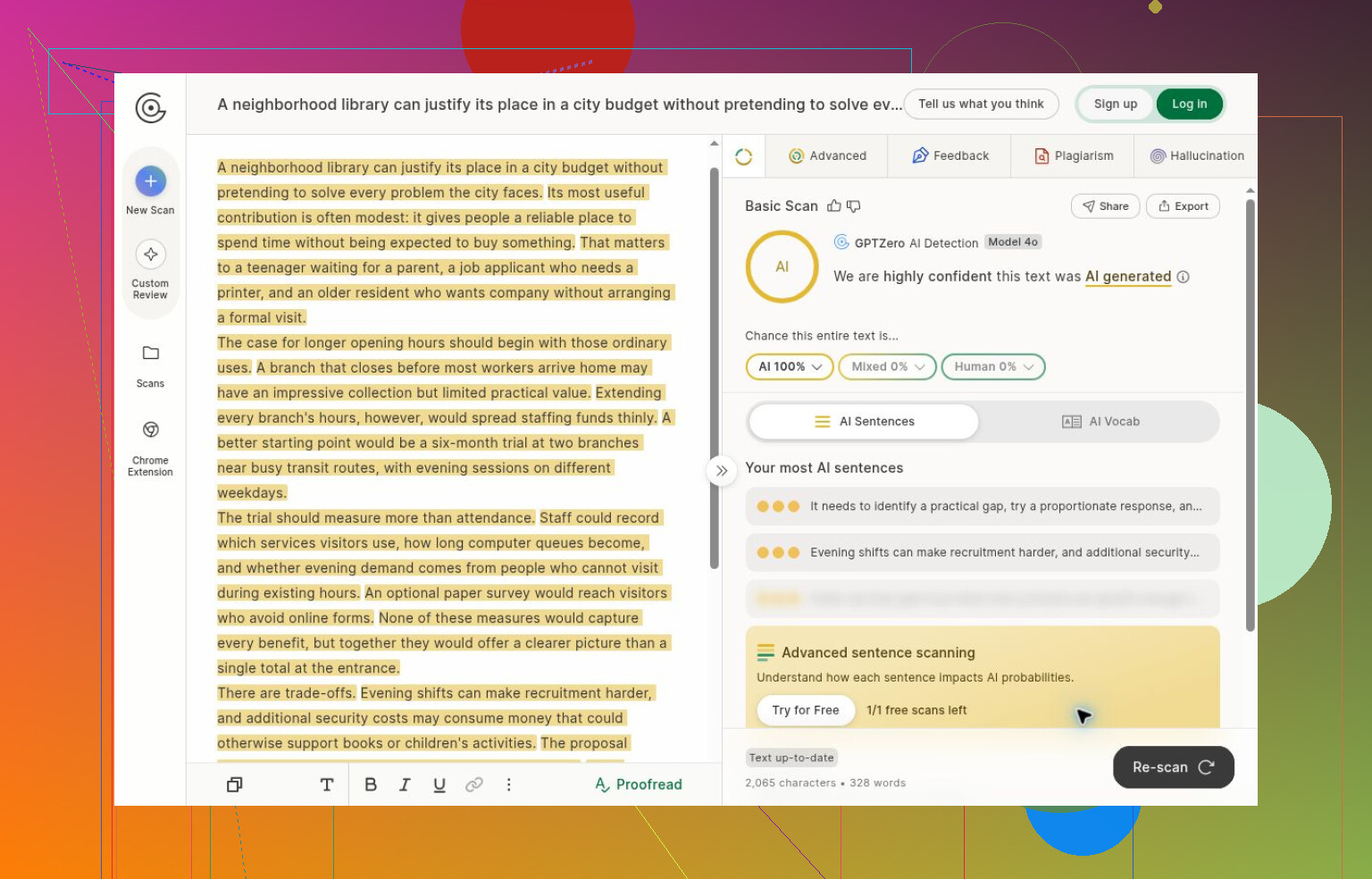
I only counted completed scans. A signup screen isn’t a detection failure, and an old score left onscreen isn’t a fresh result. GPTZero did that after I changed the input, so it’s worth watching for.

This was a small comparison, not a general accuracy study. Some passages were related, and historical literature isn’t a substitute for varied modern human writing. I also kept confidence, probability, and estimated AI share separate. Those labels don’t all answer the same question.

Mistakes mattered more than confident wording

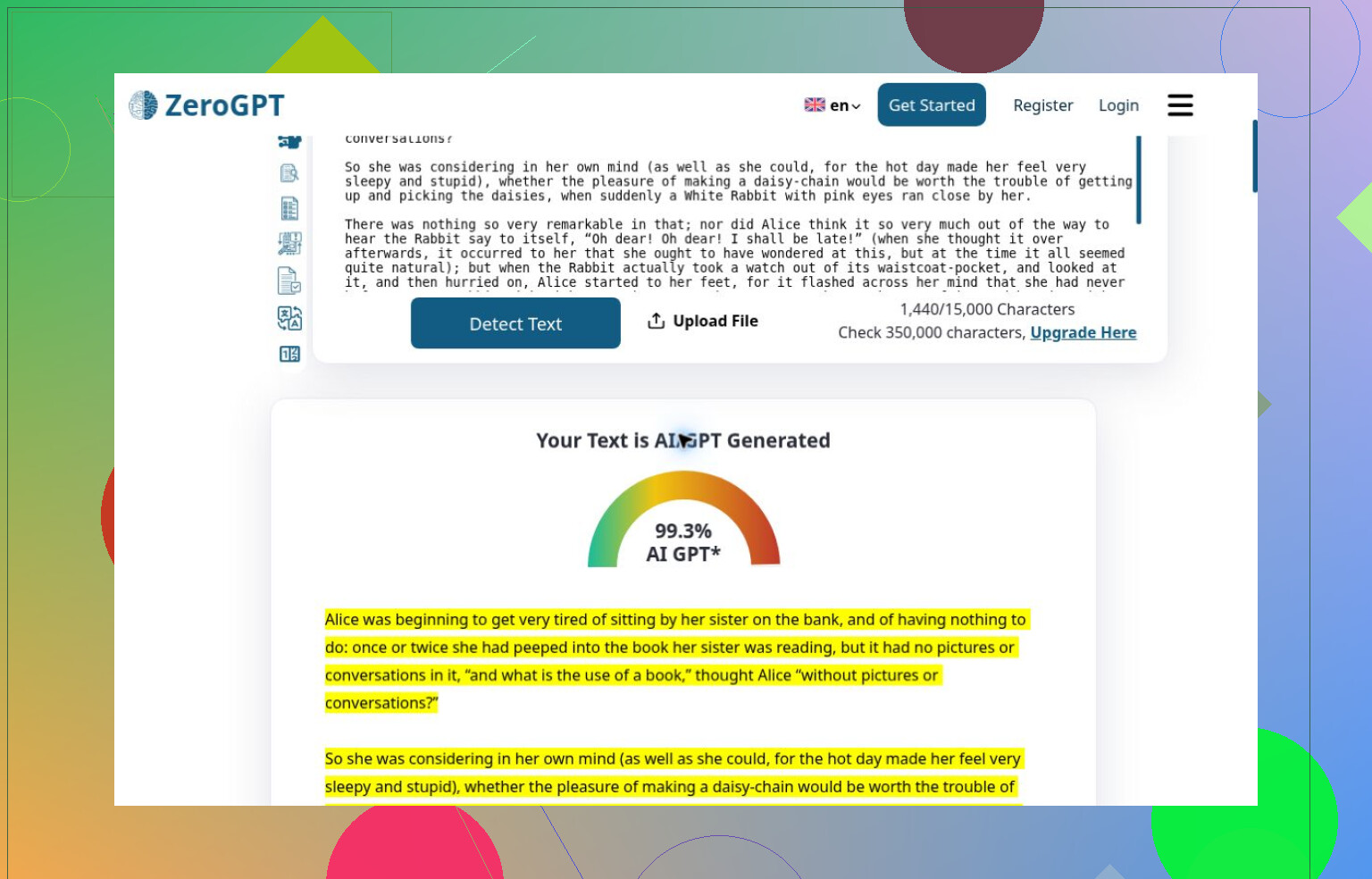
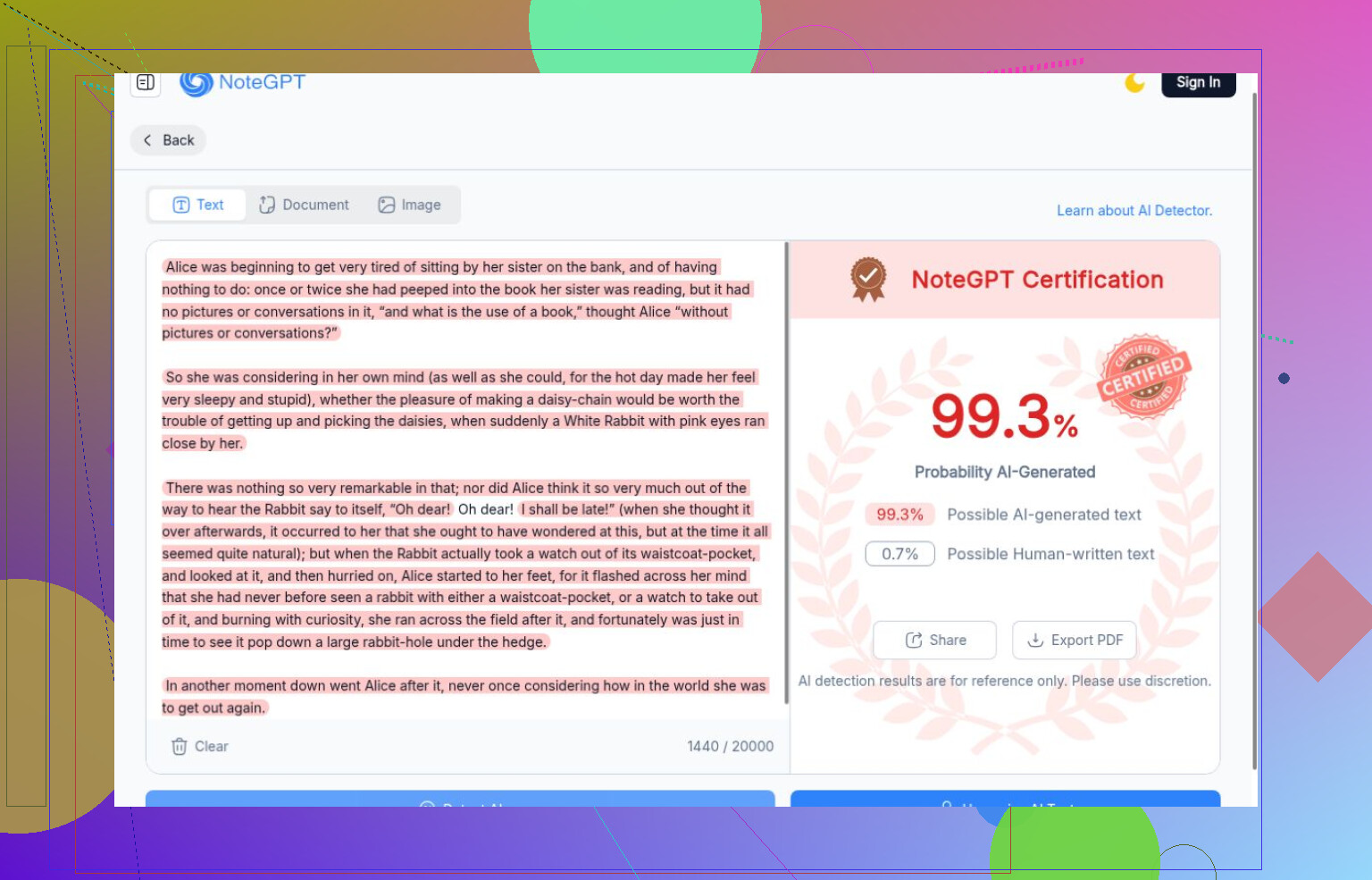
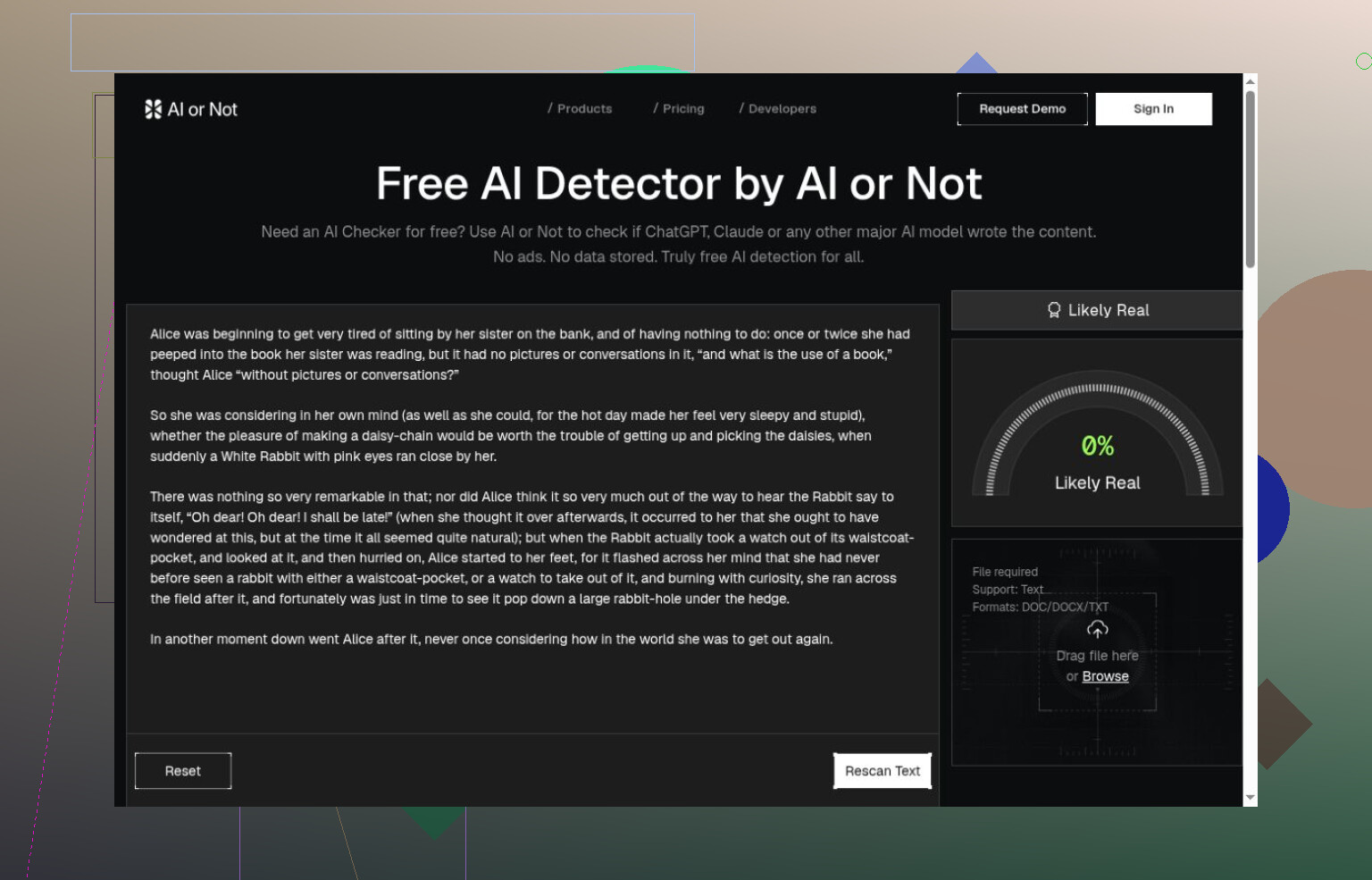
The human control was my biggest warning. ZeroGPT caught the generated passages but labeled Carroll 99.3% AI, above every generated sample. NoteGPT also gave the human excerpt its strongest AI score. Similar numbers don’t establish shared technology.

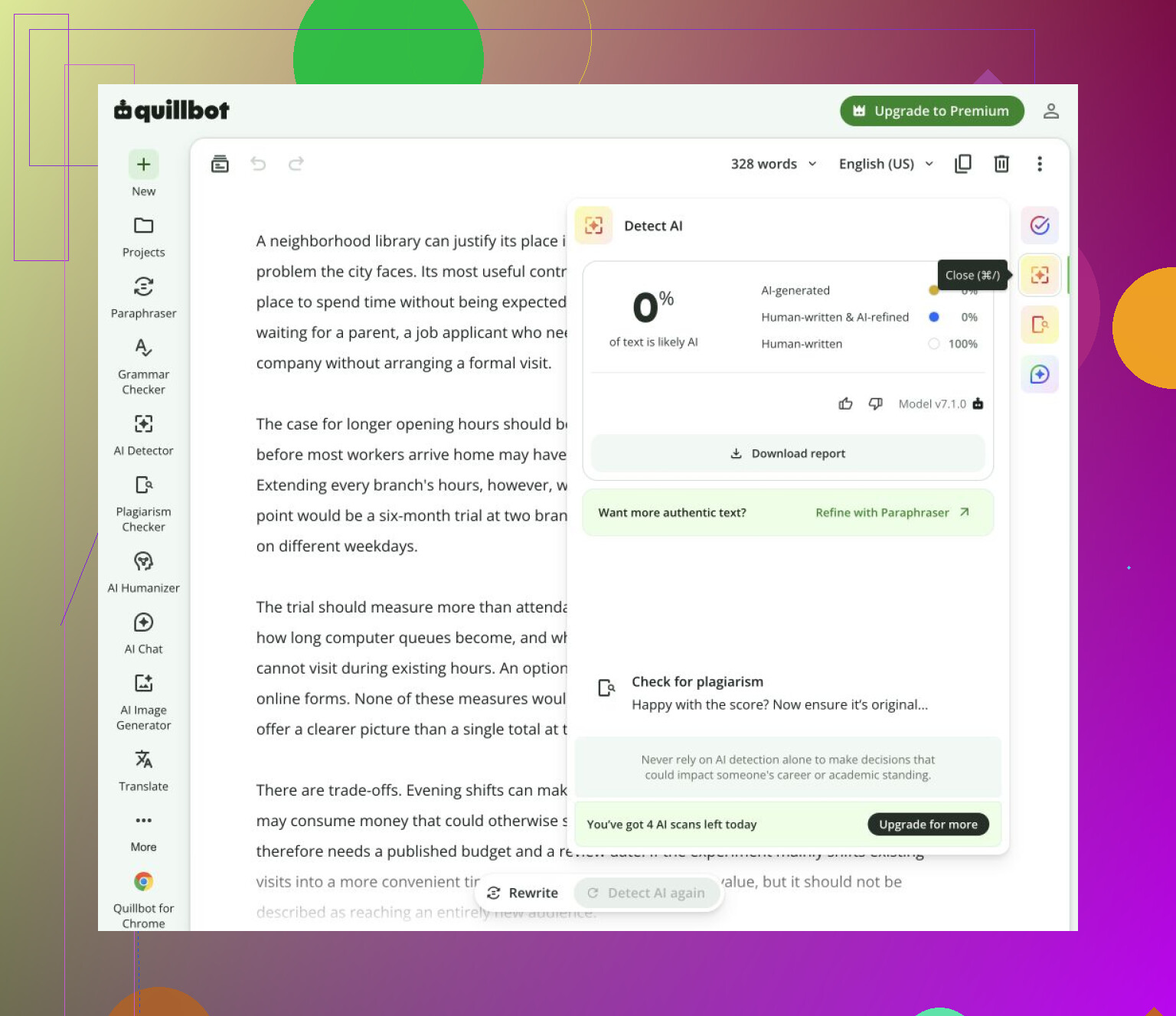
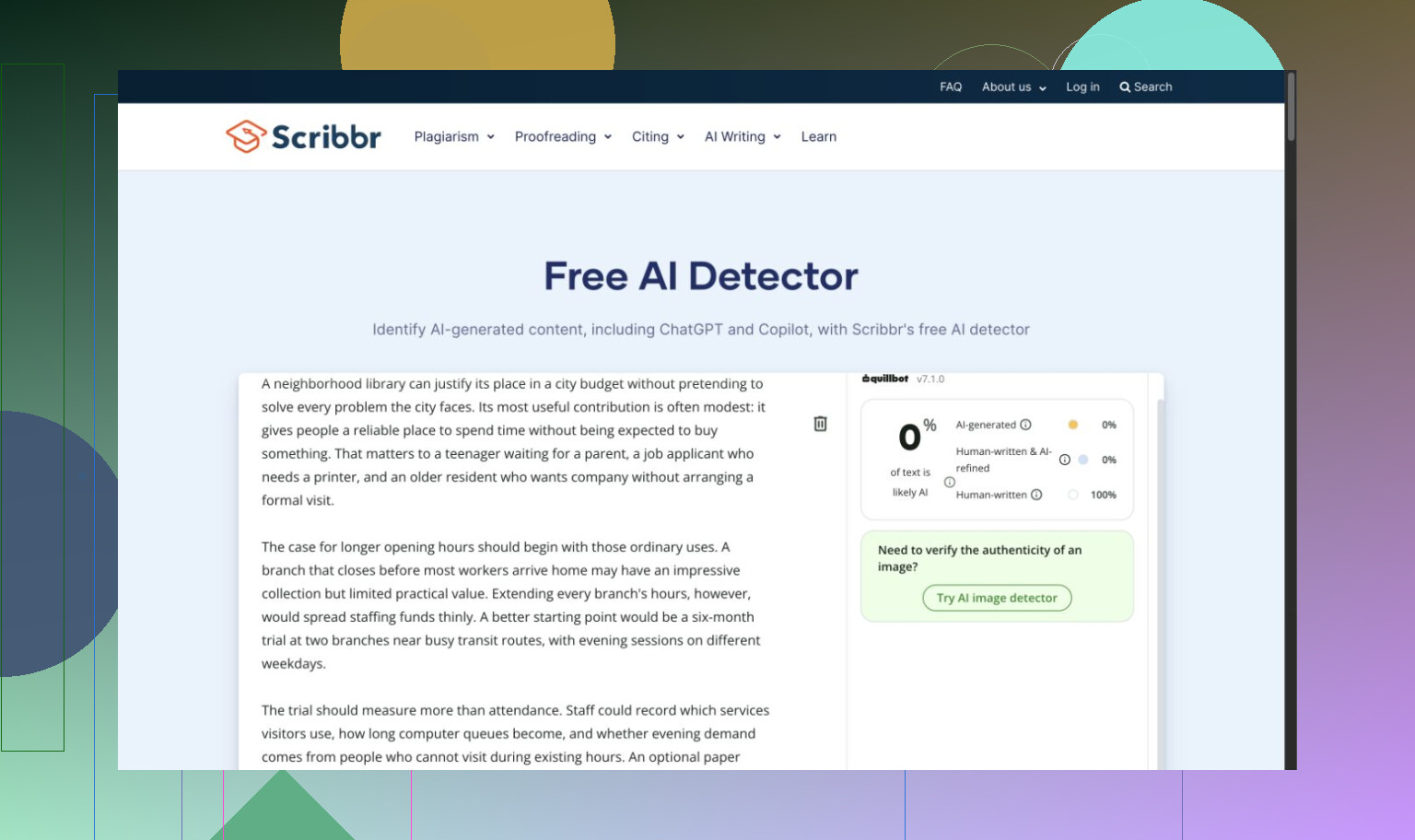
Other tools missed generated writing instead. QuillBot called every generated passage human, while correctly accepting Carroll. Its guest session ended before the mixed passage. Scribbr accepted Carroll too, but missed the essay; visible QuillBot branding kept me from treating them as automatically independent votes.

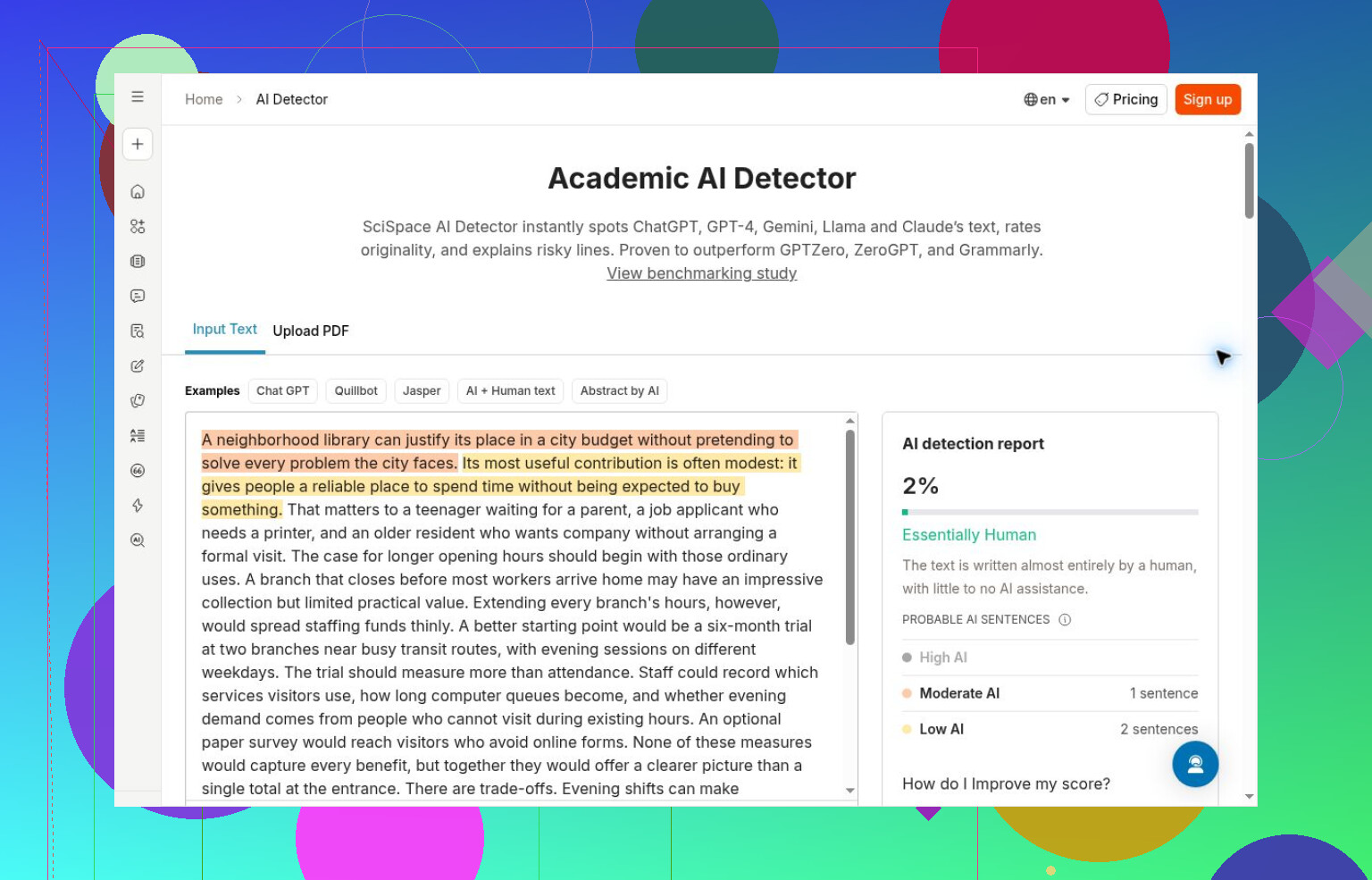
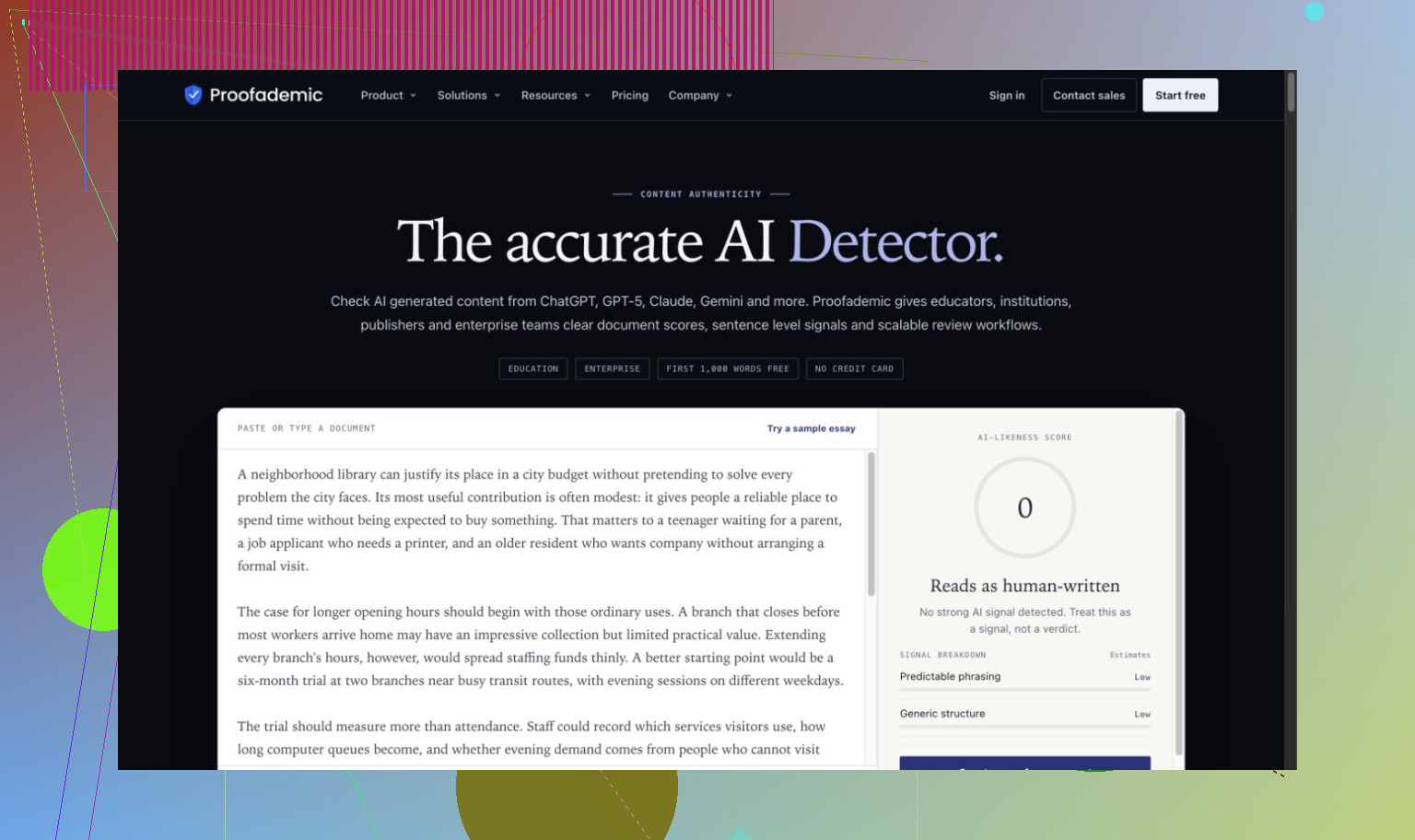
SciSpace described the generated essay as essentially human. Proofademic’s public demo also missed it, though that says nothing about authenticated reports. Surfer accepted the human control but missed both generated passages it checked.

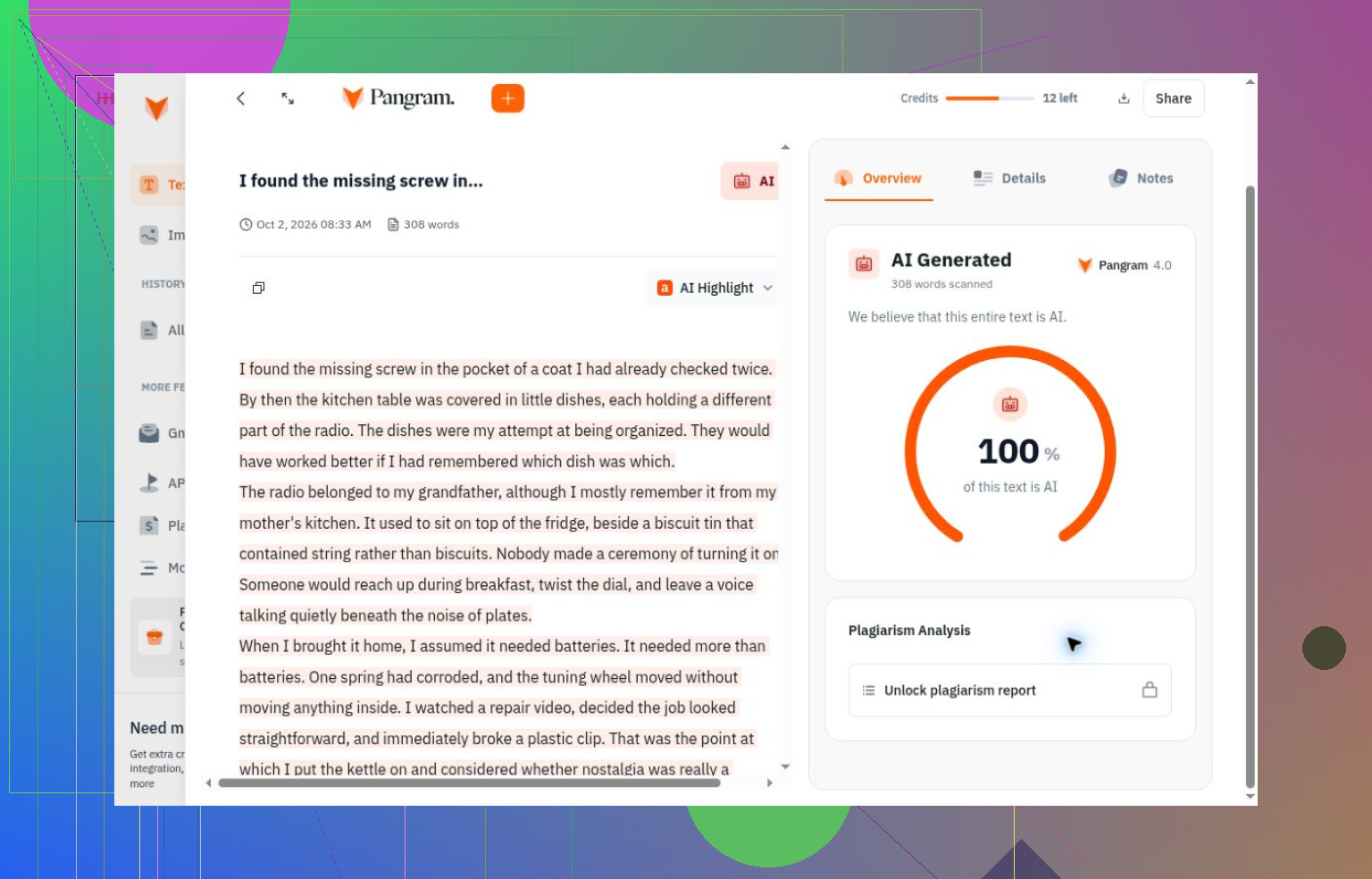
The edited Carroll passage needs its own category. AI involvement means it isn’t another pure-human control, but a human verdict doesn’t establish that a tool can recognize light editing. Clever and Pangram both treated that version as human. I wouldn’t turn those outcomes into claims about mixed writing generally.

Which options I’d try first

I cared most about finishing checks without an account, then about whether the completed verdicts matched the known origins. That favors usable guest access, not necessarily the best paid system.

For that limited purpose, I’d begin with Clever AI Detector. It finished the entire set free, caught the generated passages, and accepted Carroll. I didn’t verify its advertised unlimited use or maximum length. Sentence colors sometimes disagreed with the headline, and explanation tags weren’t consistently helpful.

Pangram, Originality.ai, and AI or Not got their completed generated and human checks right, with narrower coverage. Pangram’s credits depended on length. Originality’s confidence described a threshold-based verdict, not generated-word share.

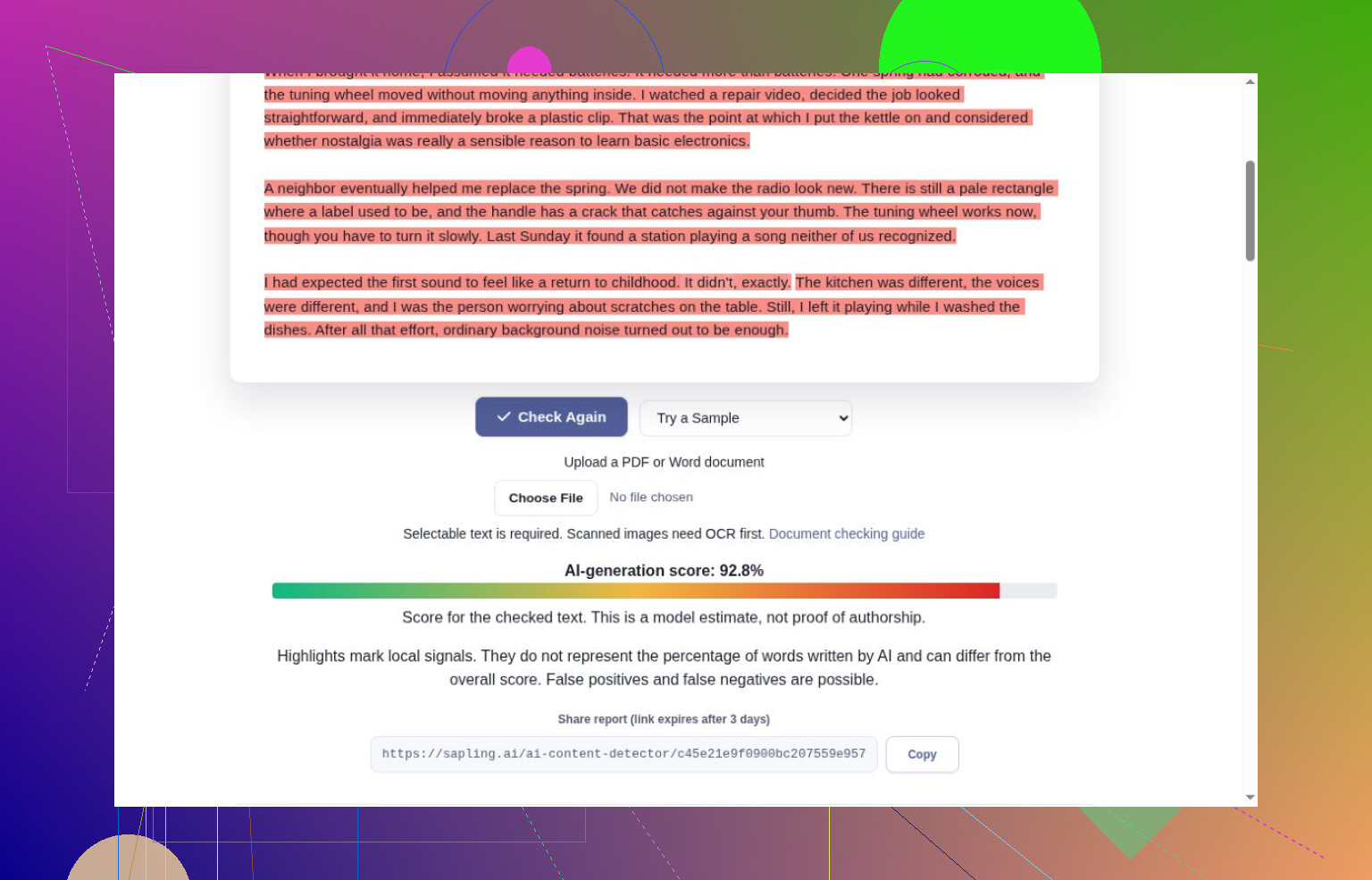
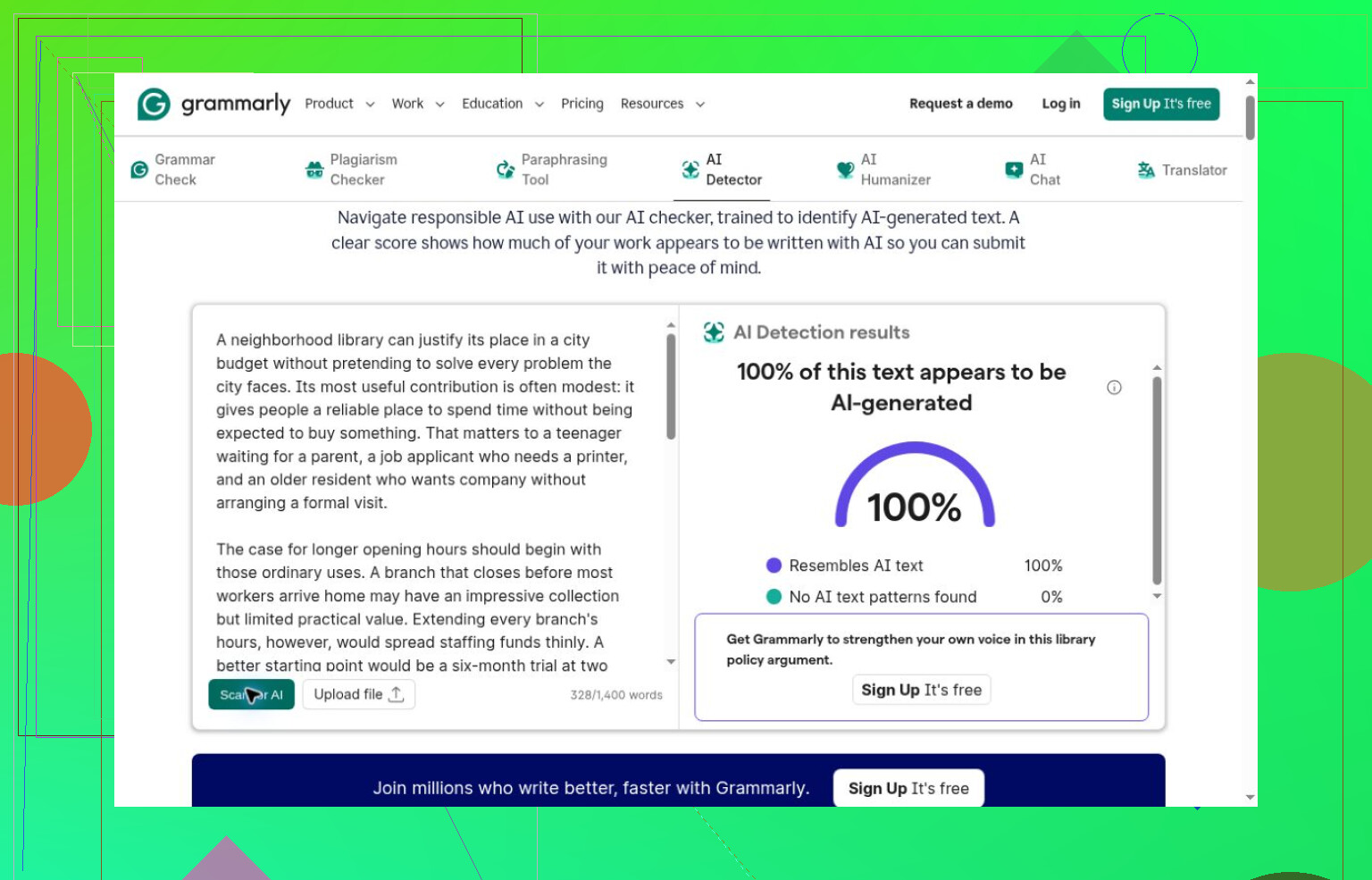
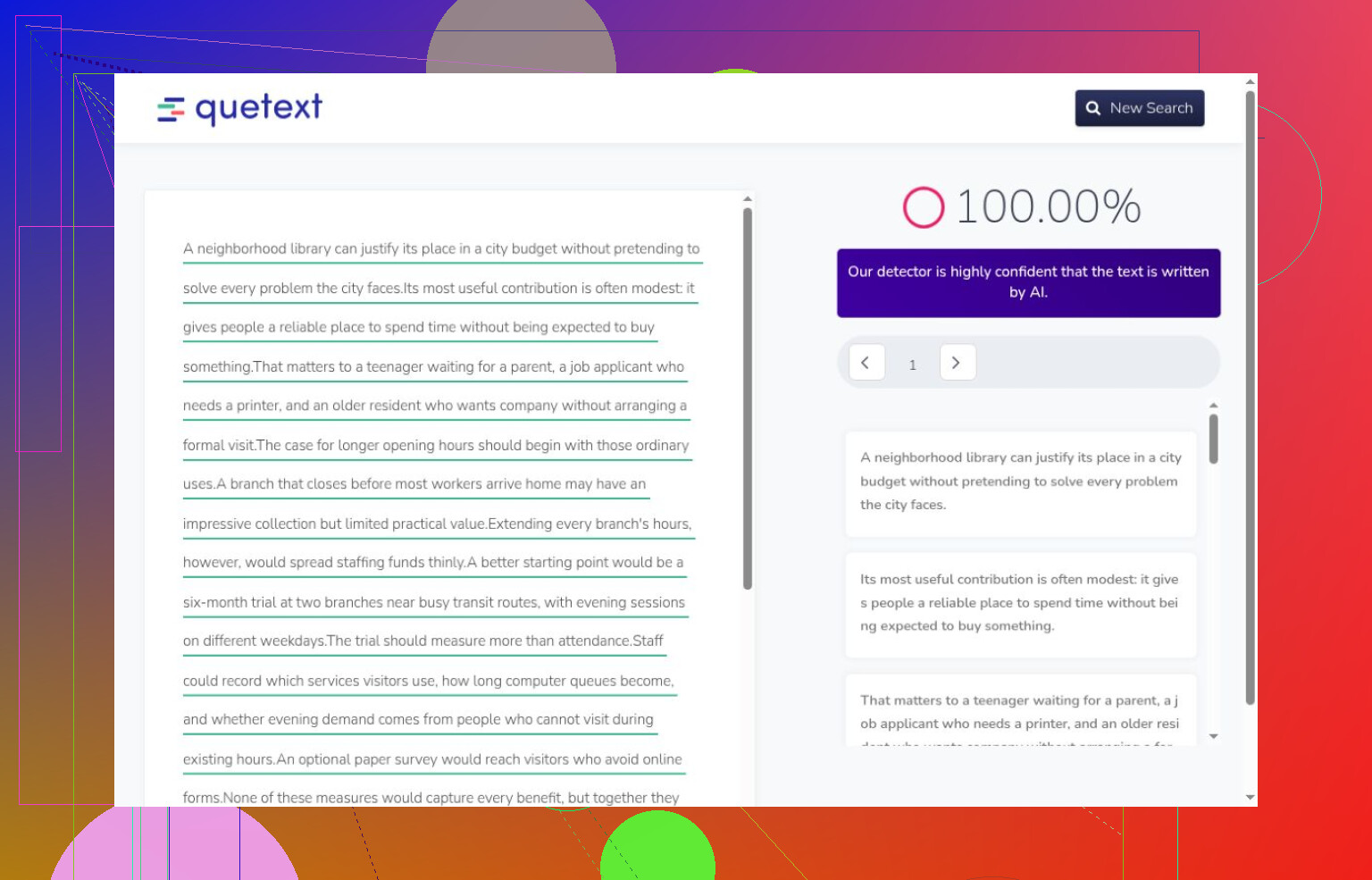
Sapling correctly handled the complete story and human checks, but clipped the essay. GPTZero, Grammarly, and Quetext caught the generated material they completed before access barriers, without human-control results. Quetext’s sentence inspection was useful; it didn’t make the limited evidence broader.

Where I stopped rather than guessed

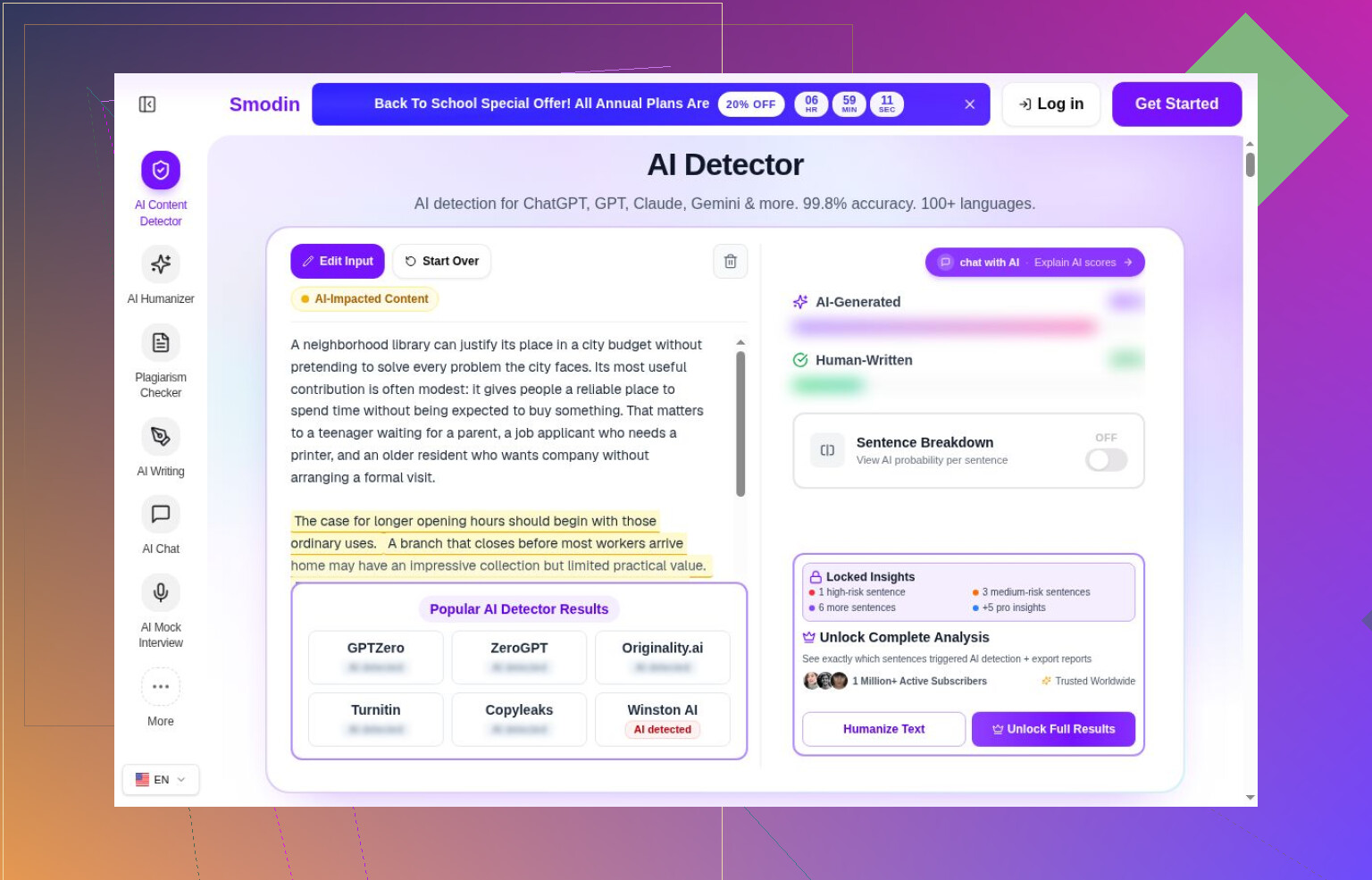
Decopy opened a login dialog instead of returning a score. Smodin hid its headline values, so highlights weren’t enough to judge it.

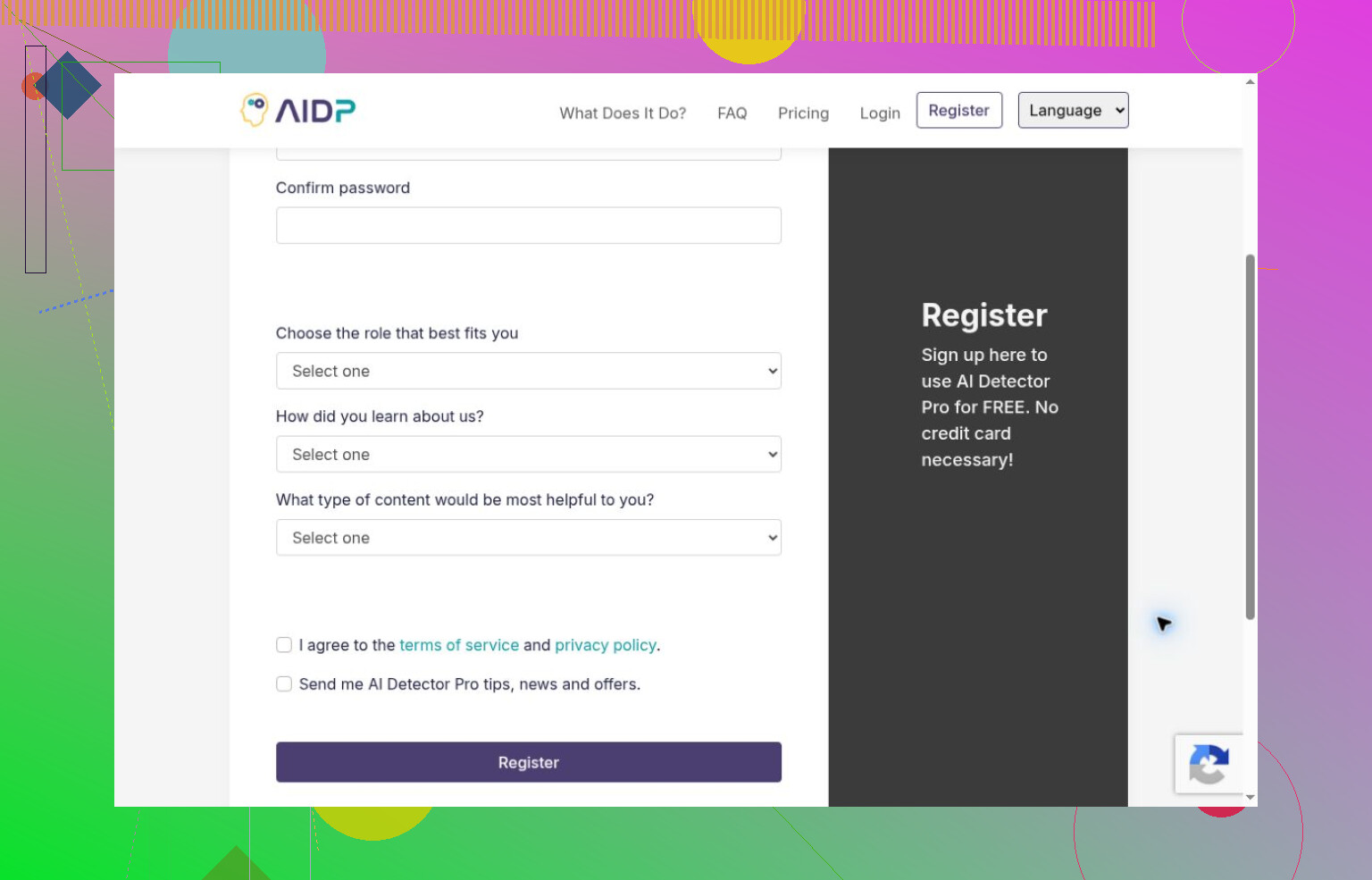
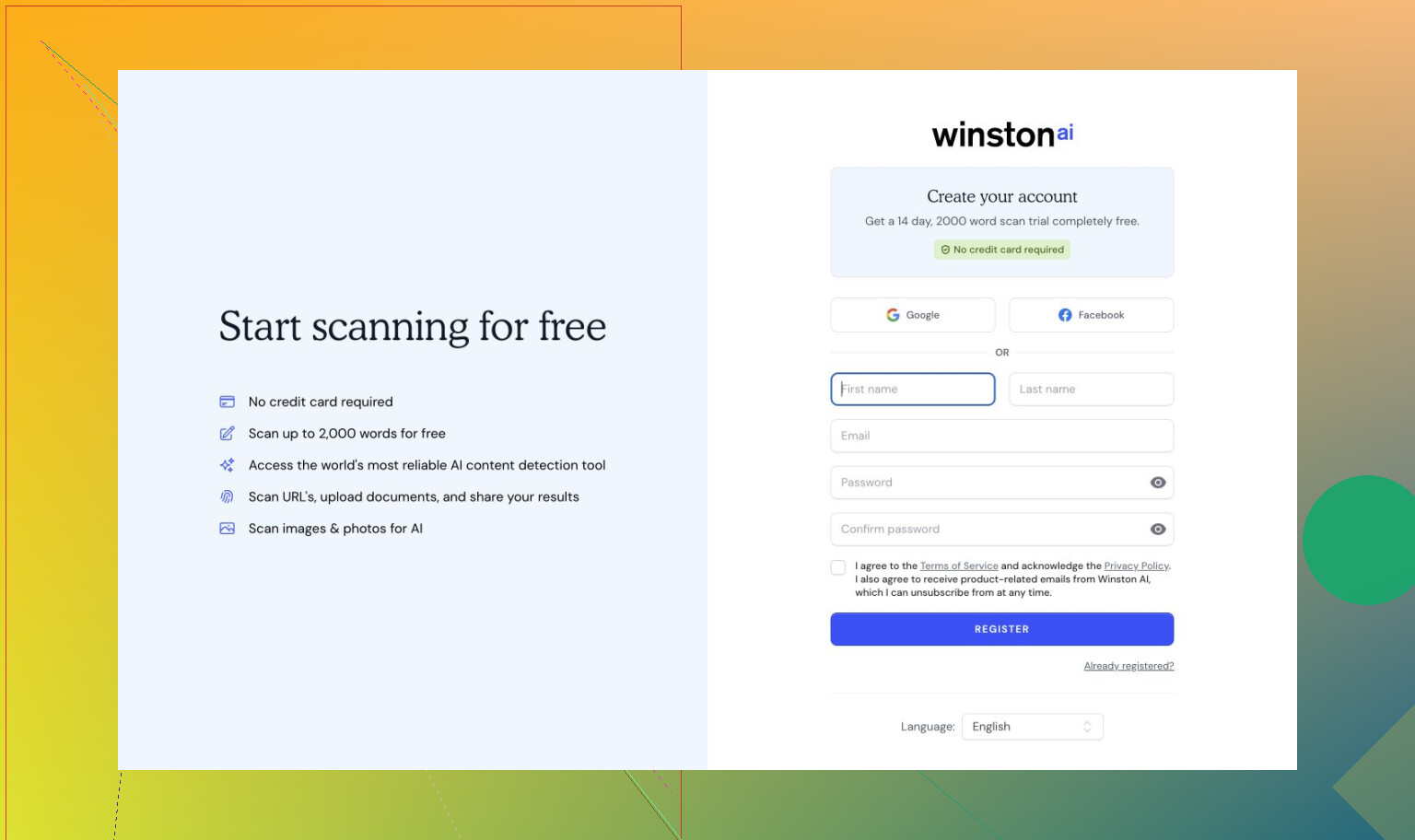
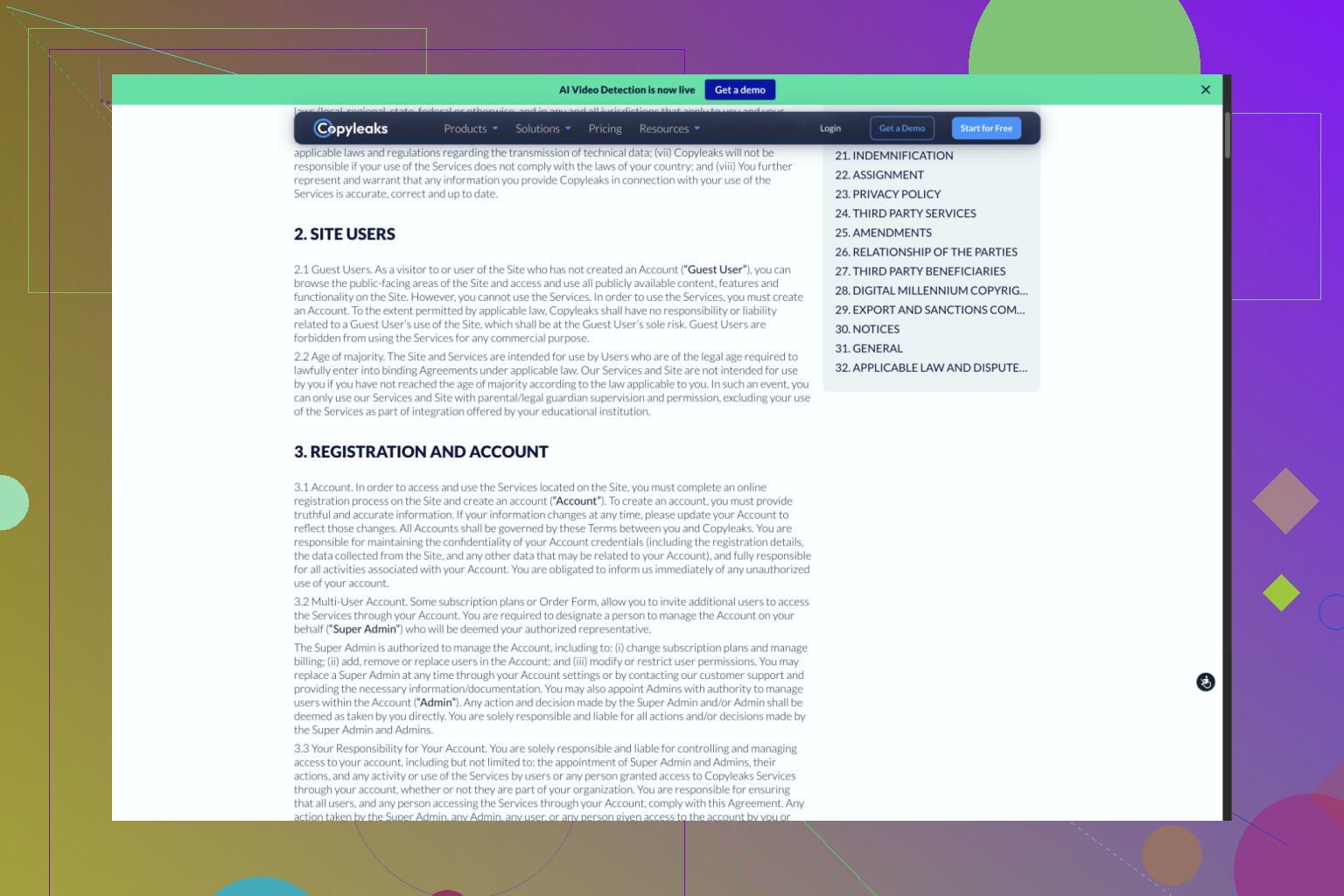
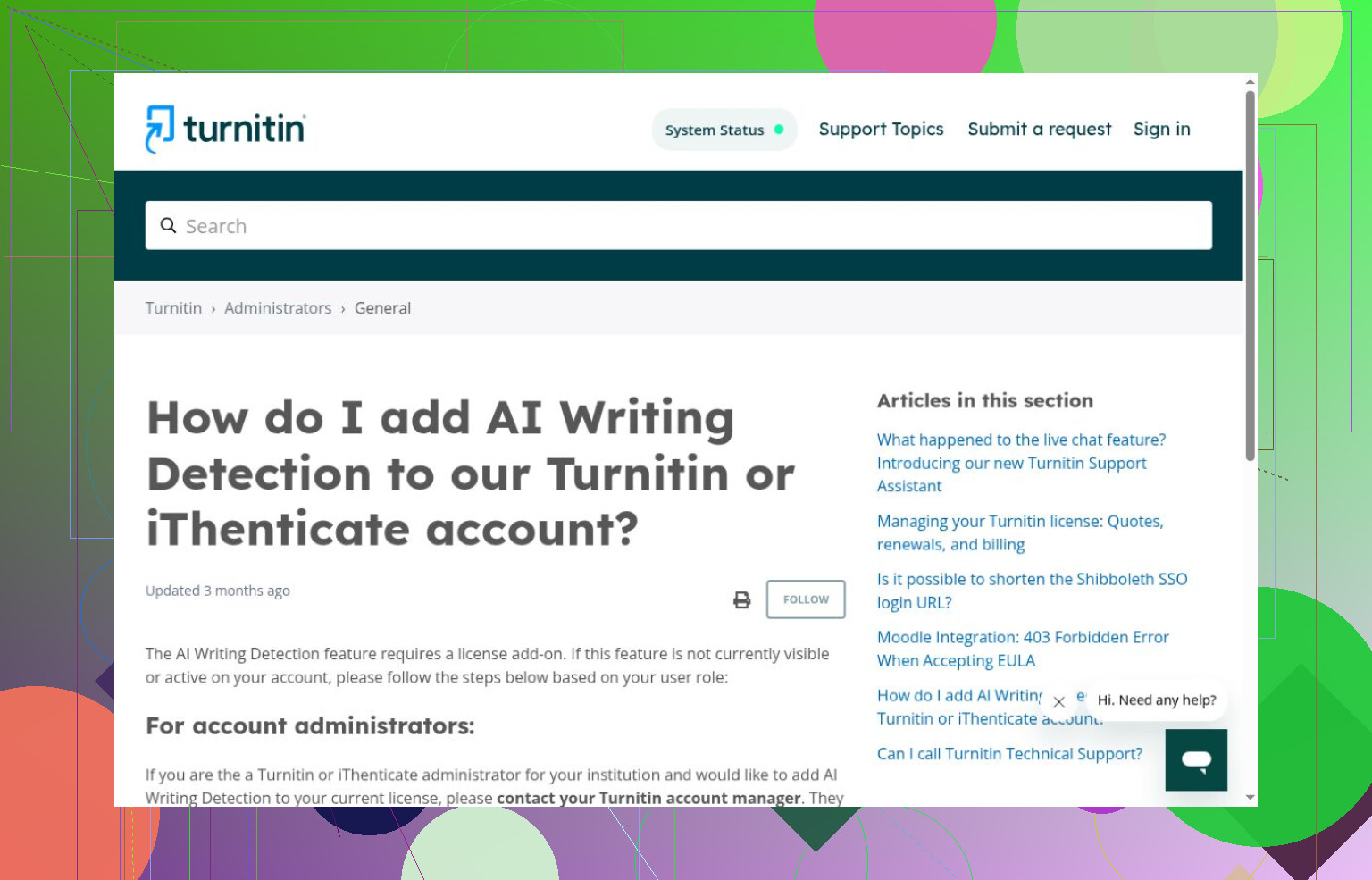
AI Detector Pro and Winston AI required registration. Copyleaks loaded a guest interface, but I stopped over applicable-use terms. Turnitin needed institutional access and a license add-on. None earned an accuracy ranking from those encounters.

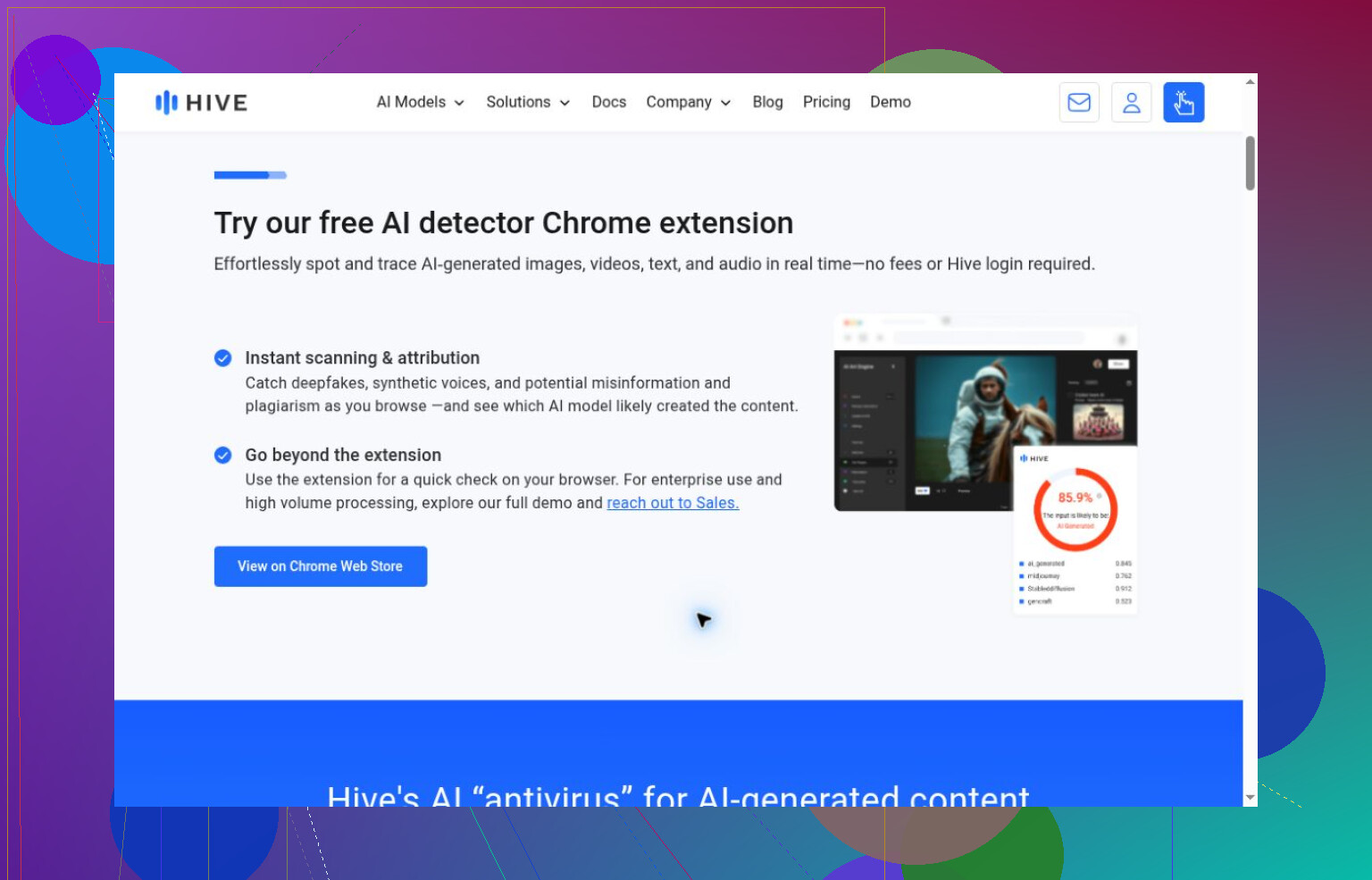
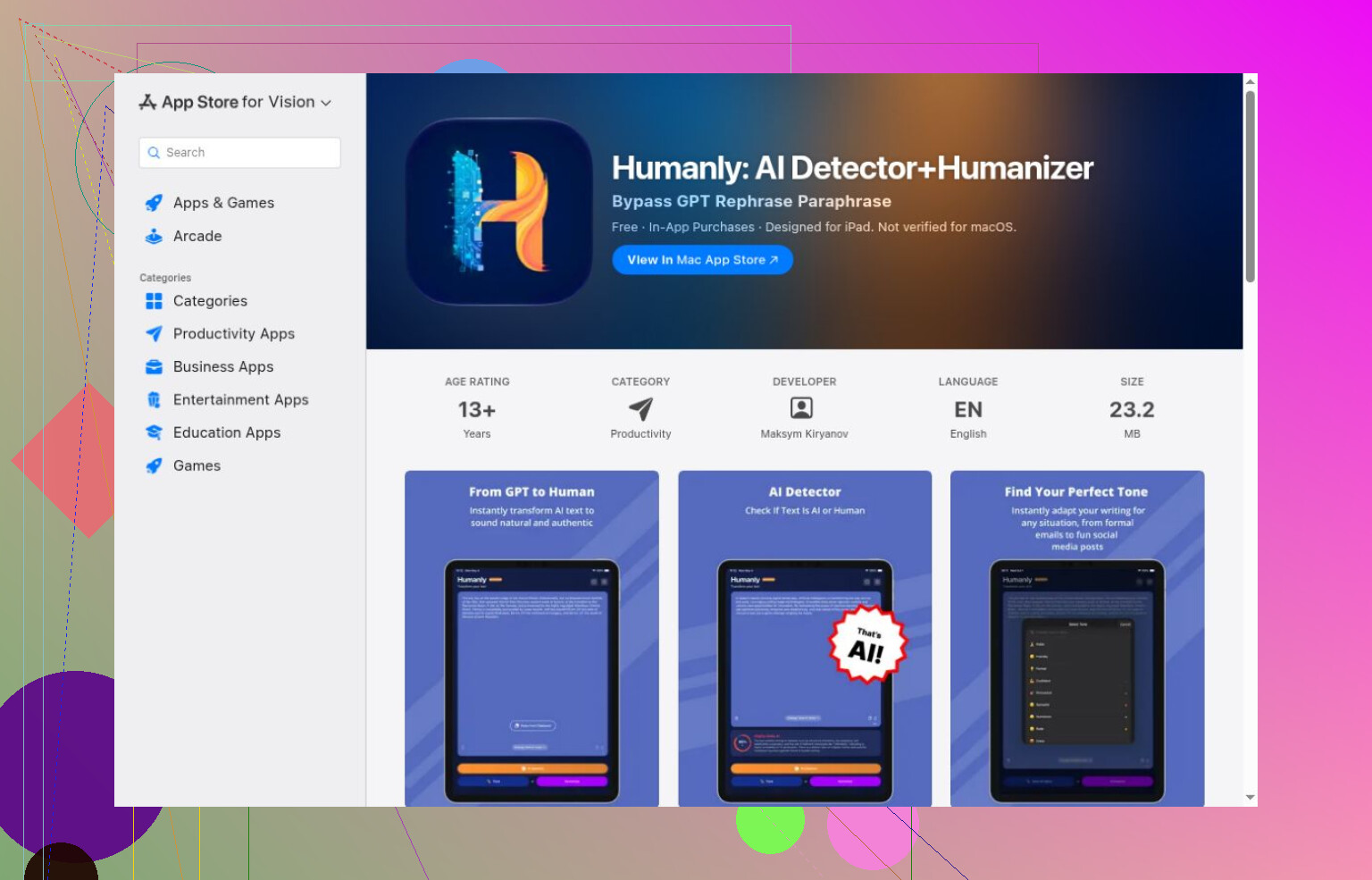
Hive’s inspected demo handled media; I didn’t try its text extension or API. ContentDetector.AI sent me to a Moxby extension listing, which I didn’t install. Humanly was only an Apple store-listing inspection, with in-app purchases and no verified free scanning allowance.

Those are access observations, not reasons to declare the detectors bad.

What would change my preference

I’d keep drafts and sources when investigating a disagreement rather than accuse someone from a score. Current allowances also need checking before choosing a workflow.

My preference could change with a larger independent comparison covering unrelated generated samples, modern human writing, light AI edits, and other languages, plus verified paid-workflow results. Until that evidence exists, this is a starting point for guest checks, not proof of dependable authorship detection.
8 Likes

Whether the rewrite preserved the trigger for each troubleshooting step matters more than how natural it sounds. “If the error persists, we can investigate” becoming “We’ll resolve the error” changes both when support acts and what it promises. Clever AI Detector would be my pick for a separate detection check, but @devfox4411’s comparison doesn’t address that kind of meaning change. For your support draft, I’d keep conditions and commitments off-limits to rewriting and only smooth the wording around them. If reviewing those changes takes longer than editing the original, Undetectable AI isn’t saving your team work.

Don’t let that rewritten promise become a saved support reply before someone checks where else it will be used. A bad sentence in a draft is still easy to contain. My bigger concern would be someone approving the smoother version and turning it into the team’s default answer.

I’d handle this as a correction to the support instructions, not another round of tone editing. Keep the original beside the rewrite, mark the changed commitment, and check whether that wording made it into any macros or help articles. If it stayed in the draft, great. There’s no reason to turn a caught mistake into a huge cleanup project.

I agree with @0xcoder9 about protecting commitments, but I wouldn’t stop at telling the rewriter to leave certain words alone. I’d give a teammate only the revised draft and a sample customer situation, then ask what they think they’re authorized to offer. That tests the message someone actually takes away, rather than whether the right conditional words survived.

For the separate detection task, I’d recommend Clever AI Detector’s Copy Report button. That’s a welcome handoff feature when you want to pass the output to another reviewer without assembling screenshots. (cleverhumanizer.ai) For this support draft, though, I’d make the approval question about customer expectations.

For example, suppose an account needs to pass a review before support can restore access. Have the reviewer read the reply as a customer whose review is still pending. Would they expect access back immediately? Would they think approval was guaranteed? I’d reject any version that gives either impression, even if nobody can point to a single obviously wrong sentence.

Based on the change you described, I wouldn’t approve this Undetectable AI rewrite for reuse. The useful next step is checking whether the mistake stayed local, not getting the paragraph to sound even more natural.

A detector result wouldn’t answer your team’s question, so I’d skip the separate check @0xcoder9 suggests. Clever AI Detector still earns a place in reviewer training: ask people to approve or reject the wording before showing its result. Then see whether anyone lets that score override a commitment problem they correctly spotted.

The original needs that reader test too, not only the rewrite. I’d extend @omegabuilder’s suggestion by giving different teammates each version and the same customer situation, without saying which is which. Ask what has to happen before they can take the next step. If their answers differ, you’ve isolated a useful problem. If both versions leave them guessing, the source draft needs attention before you try to make it sound less stiff.

That wouldn’t excuse the promise Undetectable AI introduced. I’d just be cautious about treating the original as the answer key rather than checking against your team’s actual procedure. A condition might clearly govern the next sentence but leave its connection to later steps unclear. For a support draft, I’d rather ask an editor to flag awkward or ambiguous passages first, with no replacement text. You can then decide which passages need a wording change and which need someone to clarify the instructions.

A support response can be slightly rigid and still complete its purpose. Prior to conducting the reader tests, I would attempt to adjust the layout: short paragraphs, visible conditions, differentiated steps, with the wording remaining the same. This could eliminate the readability issues while preventing Undetectable AI from having an opportunity for negotiation on your team’s concessions.

Smoother wording was never the problem worth solving here, so I’d stop framing this as a tone fix at all. Undetectable AI didn’t make a stiff sentence readable. It swapped a maybe for a yes. That’s an accuracy edit disguised as a style edit, and those are the dangerous ones because they slip past anyone who’s only listening for how the sentence sounds.

Here’s the part that actually bites you later. A line like ‘we’ll resolve the error’ doesn’t just mislead one customer. It gets quoted back at you. Someone screenshots it, pastes it into a follow-up, forwards it to a manager, and now your team is arguing about a promise a rewrite tool invented. The original conditional protected you from exactly that. You lose that protection the second the hedge disappears, and you don’t find out until the escalation lands.

@matrixcache9848 has the right instinct about layout, and honestly I’d do that step too, but not before the commitment is fixed. Rearranging paragraphs around a wrong promise just makes the wrong promise easier to read. Structure first only works when the content underneath is already safe. Yours isn’t yet.

I’m less convinced by the heavy reader-test machinery a couple of people are proposing. Handing two unlabeled versions to teammates and comparing their answers is a fine experiment if you have time to run it, but for a single swapped clause it’s overkill. You already know what changed. Just put the two lines side by side, confirm the rewrite altered the meaning, and restore the condition. Save the blind-testing for when you genuinely can’t tell whether a draft is clear.

On the detection side, I’d keep that completely separate from the commitment problem. If you want to run the text through Clever AI Detector for your own records, go ahead, but a detection score tells you nothing about whether the promise is safe to send. Those are two different jobs and mixing them is how the real issue gets buried under a number.

The thing people forget with these rewriters is that they optimize for sounding human, not for staying true to your source. So on anything with conditions, commitments, timelines, or eligibility language, I’d just stop feeding it those sentences. Smooth the connective tissue around them by hand if you must. Let the tool nowhere near the clauses that carry an actual obligation.